
SEO

Get ranked. Get found.

Right now, people are typing exactly what you sell into Google and giving their money to whoever comes up. SEO is the work of being the one who comes up. Not tricks, not hacking Google. Just making it obvious to a search engine that you are the best answer to a question somebody is already asking.

In plain English

What SEO actually is.

You do not need to understand how it works to buy it. But you should understand what you are buying, so here it is without the jargon. Three things happen, in this order, every time somebody searches.

  1. Somebody types a question

    "Emergency plumber near me." "Who repairs slate roofs in Devon." "Food grade floor coating." They are not browsing; they have a problem and a wallet, and they are three seconds from choosing somebody.

    This happens whether or not you exist online

  2. Google picks who to show

    It looks for pages that clearly answer that exact question, on sites it considers trustworthy and quick. It cannot visit your premises or meet you; it can only read what is on your website and what other sites say about you.

    Everything we do is aimed at this moment

  3. You are on page one, or you may as well not be

    Almost nobody goes to page two. If you are not in the first handful of results, the search may as well not have happened; the customer is already on the phone to whoever was.

    This is the whole game

Why it is worth paying for

Advertising interrupts people who were not thinking about you. Search reaches people who are already looking for exactly what you do, at the moment they are looking, which is why an enquiry from search tends to be a warmer, cheaper and better-tempered one than any other kind.

And unlike ads, it does not switch off when you stop paying. A page that earns its ranking keeps earning it. That is slower to arrive and much harder to take away.

  • Reaches people already trying to buy
  • Keeps working after the invoice stops
  • Costs nothing per click, ever
  • Works while you are asleep, or on a roof
  • Compounds: month twelve is worth more than month one
  • Measurable, so you can see whether it worked

The honest catch.

It is slow. Three to six months before the winnable terms move, longer for the hard ones. Anyone promising you page one by next month is guessing, and we would rather lose the work than join in.

SEO against paid advertising

The benefits of SEO.

Both put you in front of people who are searching. The difference is what happens on the day you stop paying, and what you are left holding after a year of it.

Measure SEO Paid advertising
Cost per click Nothing, at any volume. Every click, whether or not it turns into anything.
How fast it starts Three to six months on the winnable terms. This is the one ads win. The same afternoon you set it up.
What happens when you stop paying Nothing. A page that earned its ranking keeps it. It disappears that day, and so do the enquiries.
Cost of twice the traffic More work once. Not twice the money, every month, forever. Roughly twice the budget, permanently.
How people treat it It is the result they were looking for. It is labelled "Sponsored", and most people scroll past it.
What it is worth in year two More than year one. Pages and authority compound. Exactly what you pay for it, the same as year one.
What you own at the end The pages, the rankings and the authority behind them. The invoices.

None of this makes advertising a mistake. If you need the phone to ring this week, ads are the only thing that will do it, and we will say so. It is a poor substitute for being the answer people find on their own.

A site we did this to

Here is what it looks like when it works.

Not a client's site, but one of our own, so we can show you the account rather than describe it. Same method, same order, nothing hidden.

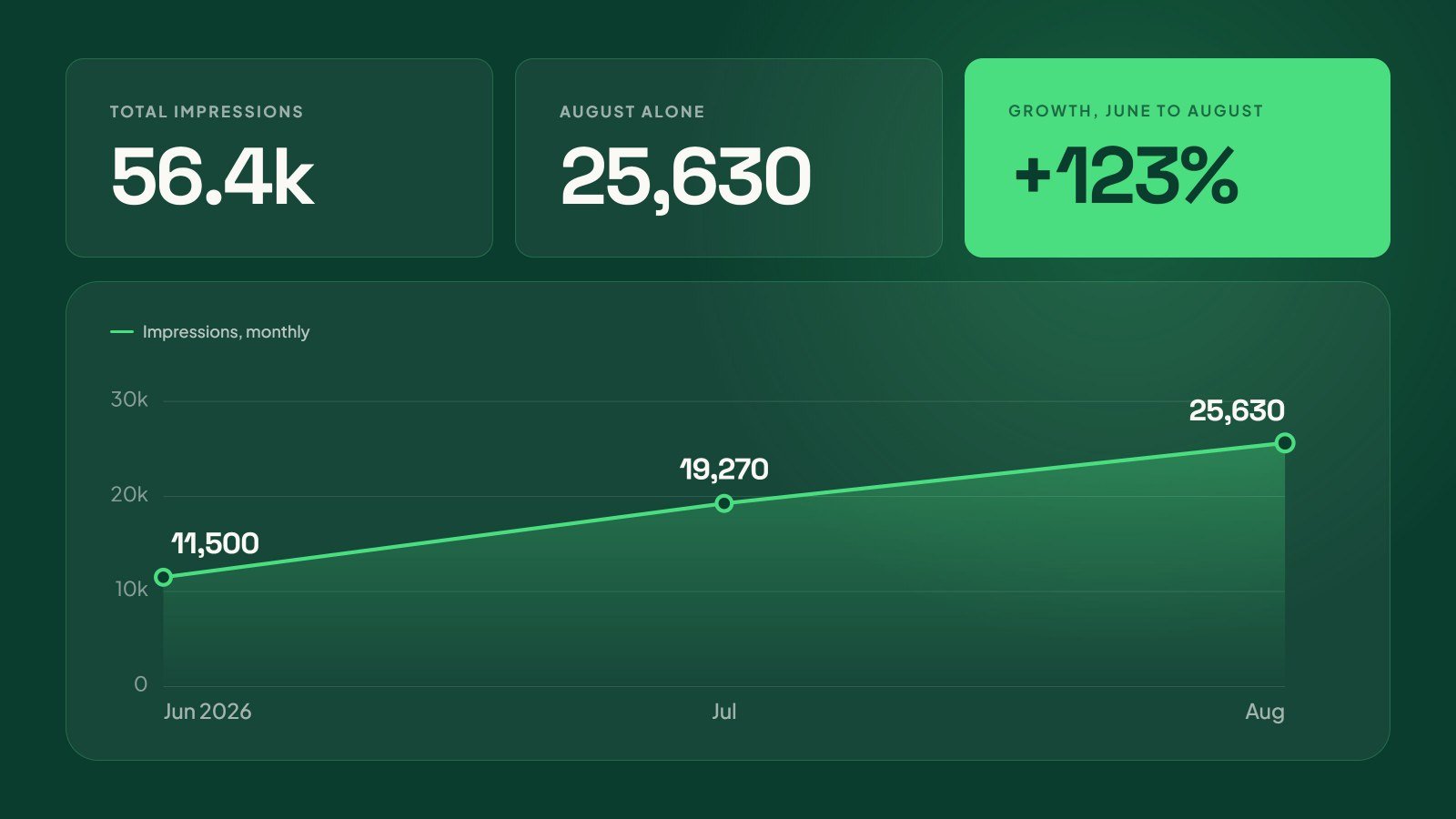
Impressions by month: 11,500 in June 2026, 19,270 in July, 25,630 in August. 56.4k in total and up 123% across the three months

56.4k impressions, up 123%

June to August 2026. How many times the site appeared in results: the first thing to move, usually well before the clicks do.

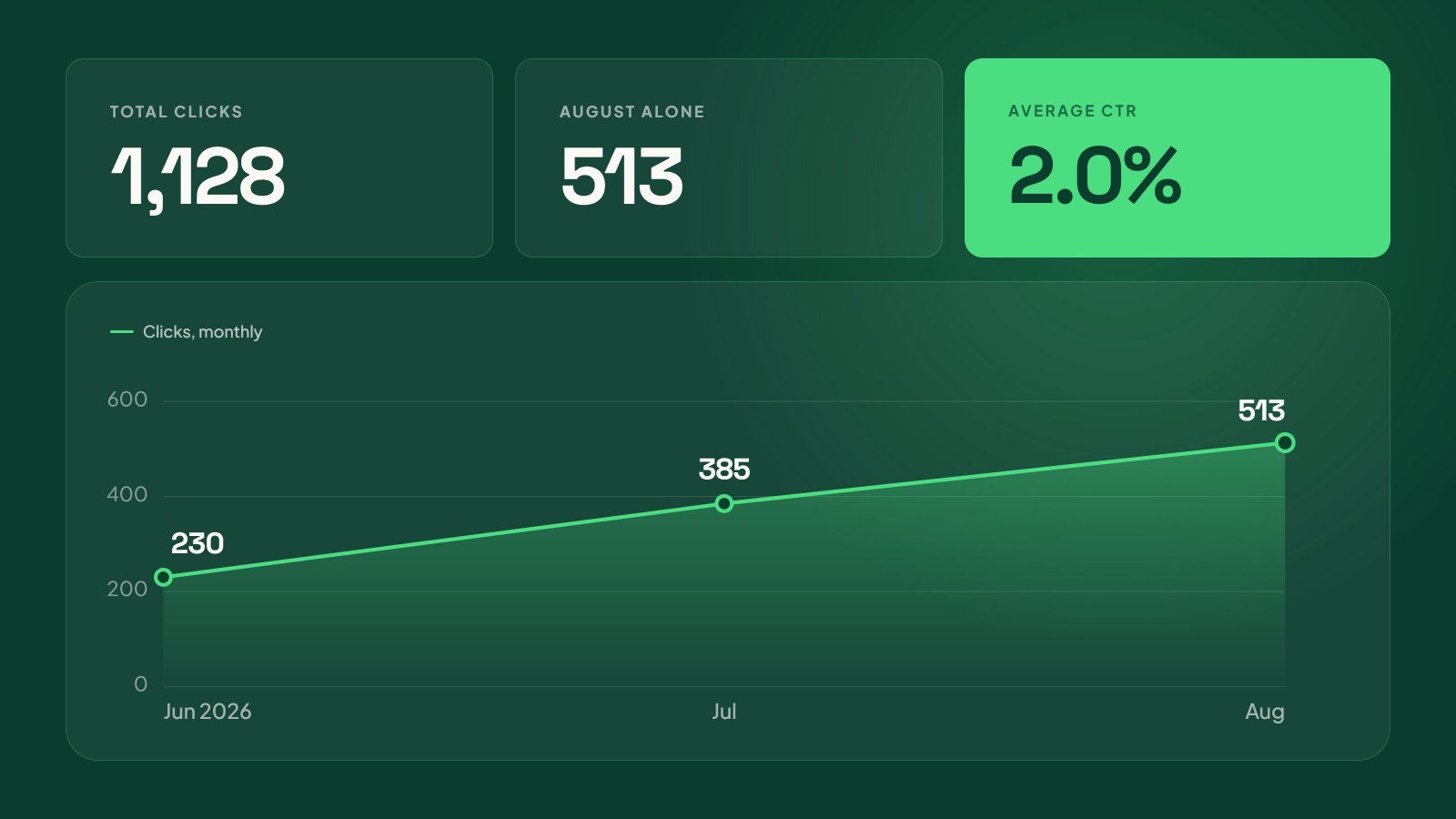
Clicks by month: 230 in June 2026, 385 in July, 513 in August. 1,128 in total at a 2.0% average click-through rate

1,128 clicks, 2.0% CTR

The half that matters. Impressions without clicks would mean we had ranked for the wrong things; that is a keyword problem rather than an SEO one.

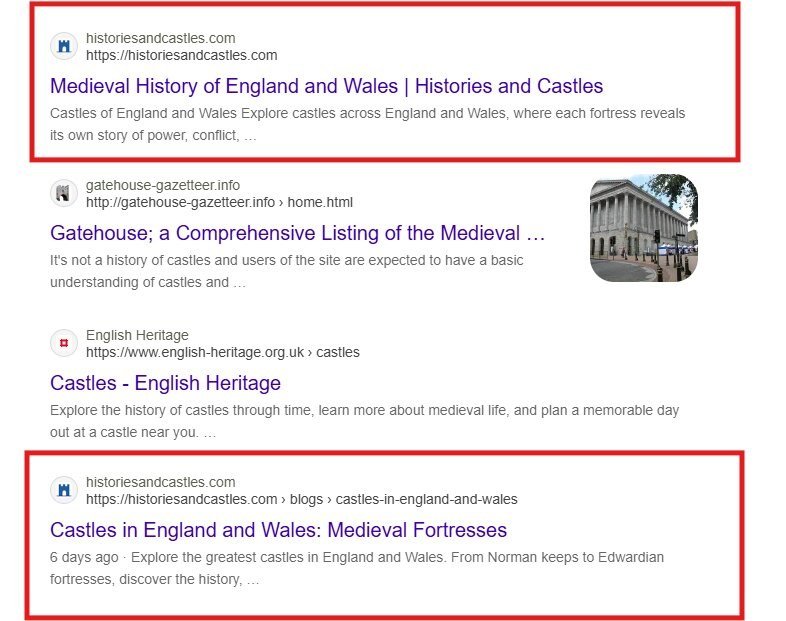
A Google results page with two historiesandcastles.com listings highlighted: the first result on the page, and a fourth result further down

First on page one

The same site against the query it was built to win, holding the top result and a fourth further down the same page.

Three months of one site, not a portfolio. We would rather show you a short honest run than a long anonymous one.

What good is a website if no one can find it?

Get ranked. Get found.
The four disciplines

SEO is four jobs, not one.

Almost every site we look at is doing one or two of these and ignoring the rest. They only work together: the best page in your trade still loses if Google cannot load it, and the fastest site in the world still loses if nobody links to it.

On-page SEO

Everything on the page itself: the words, the headings, the structure. This is what tells Google what the page is actually for, and it is the part most sites get wrong by trying to cover six things at once.

How we do it

  • One page, one search term, taken from the research
  • Titles and headings written to that term rather than to sound clever
  • Copy that answers the question underneath the search
  • Internal links, so the pages that matter carry the most weight
  • Image alt text and file names that describe what is in them
  • Meta titles and descriptions written to be clicked, not just to exist
Off-page SEO

What the rest of the internet says about you. Google cannot visit your premises or meet you, so it treats other websites as references, and counts who is willing to vouch for you.

How we do it

  • Links earned from real, relevant sites, never bought
  • Listings in the trade registers your industry actually uses
  • The same name, address and phone number everywhere you appear
  • Suppliers, trade bodies and local press given a reason to mention you
  • Reviews, and a routine that makes asking for them normal

Technical SEO

Whether Google can reach, read and index the site at all, and how fast it is for a real person on a phone with one bar. None of the writing matters if this is broken.

How we do it

  • Speed and Core Web Vitals, measured on a real handset
  • A crawlable structure, clean URLs and a sitemap that is current
  • Schema markup, so search engines read your details correctly
  • Redirect chains, broken links and duplicate pages found and fixed
  • HTTPS, indexing rules and a robots file doing what you think it does

Local SEO

The map pack and the "near me" searches. It is a separate competition to the ten blue links below it, judged on different rules, which is why you can rank well and still be invisible on the map.

How we do it

  • A Google Business Profile filled in properly and kept alive
  • Pages that name the places you actually work
  • Citations in the local directories that still carry weight
  • A steady flow of reviews rather than one burst
  • Proximity, prominence and relevance: what the map ranks on
What ships

Research, then implementation. Both, always.

Research on its own is a document. Implementation without research is guessing. You get both, in that order.

01 Keyword research

Every term worth having, scored for how many people search it, how hard it would be to take, and how close it sits to somebody actually buying, with the ones we would skip left in and explained.

02 Implementation

The pages that go after those terms, written and built and published. This is the part that is usually missing when somebody tells us SEO did not work for them last time.

03 Technical

Making sure Google can read the site at all: speed, indexing, structured data, internal linking. Unglamorous, and it is usually where the first jump comes from.

04 Your Google profile

Rebuilt properly: categories, service areas, hours, photos, and the services list most businesses leave empty. It is the single biggest lever in local search, and it costs nothing but the doing.

05 Listings

Your name, address and phone number made identical everywhere they appear, and the wrong old ones tracked down and corrected. Tedious, and it moves the needle.

06 Location pages

One real page per place you actually serve, written for that place. Not the same paragraph with the town name swapped; Google has been able to spot that for years.

07 Authority

Links earned by being worth linking to: trade press, suppliers, industry bodies. We do not buy links, and we will tell you if a competitor is.

08 Tracking

Rankings, visits, calls and enquiries joined up, so the conversation is about money rather than positions. A term that ranks and sells nothing is a term we got wrong.

09 Reporting

Monthly, written by a person, in English, including the months where the honest answer is that not much moved, and why.

10 Ownership

Analytics, Search Console, the profile and the content are all in your name. Leaving us costs you a password reset, not a rebuild.

Straight answers

The things you were going to ask anyway.

How long before I see anything?

Your Google profile can move within a fortnight. The map usually takes two to four months, and the ordinary results three to six on the winnable terms. Longer in a city than in a market town, and longer still for the terms everybody wants. Anyone promising faster is guessing.

Can you guarantee I will be number one?

No, and nobody honest can: the ranking is Google's to give. What we will commit to is the work, the order it happens in, and telling you early when something is not moving. A guarantee of position one usually means they are bidding on your own business name and calling it SEO.

What does it cost?

A monthly fee, quoted in writing after the audit, scaled to how many places you want to be found in and how much content the shortlist needs. One town is not the same job as nine. Rolling terms, a month's notice, and the number does not move without you agreeing to it first.

We tried SEO before and nothing happened.

Usually one of three things: the terms chosen were never winnable, the site could not hold a ranking whatever was written for it, or the work was twenty blog posts nobody searched for. The audit will tell you which one it was, and you get it free either way.

I have no shopfront. Does the local half still work?

Yes. Google has a service-area business type for exactly this, set up differently to a premises. Plenty of the trades we work with run from a van and a home address, and hiding that address is part of the setup, not a problem with it.

Is AI going to make all of this pointless?

It has already changed it. More questions get answered on the results page without anyone clicking through, and the searches that still send people to websites are increasingly the ones where somebody is deciding what to buy. That is a reason to be pickier about the shortlist, not a reason to stop, and it is a strong argument for being known by name as well as by search.

Start with the audit

Find out what you are missing.

Send us the address. You will get the searches worth having, the ones worth leaving, where you rank across your area today, and an honest read on how long the climb looks, written by a person, and yours whether or not you use us.

Get my free audit